
If you have a much-loved wool or hand-knotted rug, you already know it is not just floor covering. It is colour, texture, and often a piece of family history that anchors a room. Cleaning it well protects that story.
This guide explains how professional rug cleaning actually works, when a careful on-site surface clean is enough, and when a full-immersion wash is the only safe route. We will also cover realistic UK price ranges, drying expectations, and how to avoid common mistakes that can permanently harm fibres and colours.
We clean rugs every week in our family business, so the examples below reflect what we see in Hampshire homes. No scare tactics, no small print, and always practical advice.
When a gentle on-site clean is fine
Some rugs respond beautifully to a controlled, on-site surface clean. This is typically suitable when:
- The rug is synthetic (polypropylene, nylon, polyester) with light to moderate soiling.
- It has a robust construction with a stable backing and no signs of dye bleed, ripples, or pre-existing damage.
- You only need a refresh of the face fibres and there are no deep pet odours or heavy grit build-up.
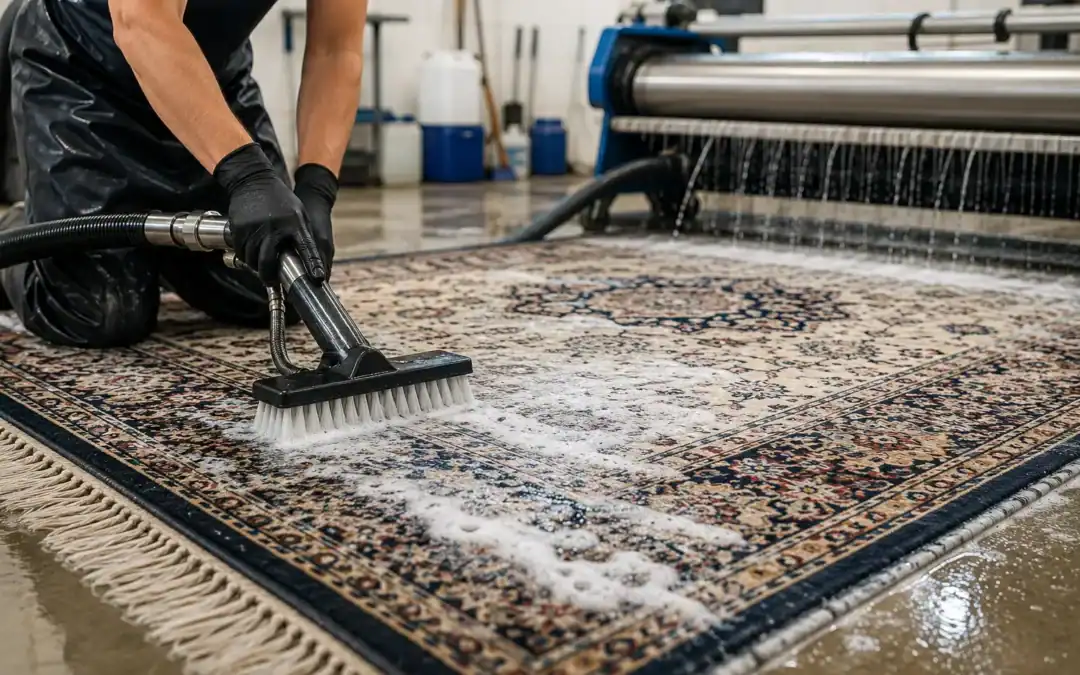
On-site, we vacuum thoroughly, test dyes for stability, pre-spot obvious marks, and use low-moisture tools to clean the face yarn. It is a tidy option that avoids the logistics of uplift. But it has limits. Surface-only methods cannot remove heavy grit that settles in the foundation, and they do little for urine salts or strong odours embedded in the warp and weft.
When a full-immersion wash is essential
Natural fibres and hand-knotted pieces trap soil deep in the structure. Wool, viscose, and cotton foundations also demand care. Full-immersion washing is the gold standard when:
- The rug is wool or hand-knotted and visibly dull or compacted with soil.
- There are pet accidents, odours, spills that have penetrated the backing, or visible dust clouds when tapped.
- You suspect moth activity or there is heavy sand or grit that a standard vacuum cannot remove.
Our immersion process is designed to be safe for delicate fibres while being thorough enough to reach the foundation.
- Pre-inspection. We identify fibre type, construction, repairs, tufting adhesives, and risks such as dye migration or shrinkage. We document pre-existing issues and set expectations before any cleaning begins.
- Dye stability checks. We carry out wet and solvent-based tests on each colour to confirm safe pH and temperature ranges. If a particular dye is unstable, we adjust chemistry and method.
- Dry soil removal (dusting). We remove the bulk of grit and fine dust using mechanical dusting and high-filtration vacuuming on both sides. This step protects the fibres and prevents mudding in the wash bath.
- Full-immersion wash. The rug is bathed and gently agitated with environmentally friendly, biodegradable solutions that lift soils without harsh residues. We rinse until the water runs clear. For sensitive wools and hand-knotted pieces, we keep to wool-safe chemistry and controlled temperatures.
- Centrifuge moisture removal. The rug is spun in a purpose-built centrifuge to evacuate the majority of water quickly. This dramatically shortens drying time and reduces the risk of dye movement.
- Controlled drying room. We hang rugs to dry in a temperature and humidity-managed room with dehumidifiers and air movers. Controlled drying limits rippling, shrinkage, and cellulosic browning in cotton fringes.
- Grooming and finishing. We reset pile lay, address fringes, and complete a final inspection.
It sounds technical because it is. The point is simple though, a proper wash cleans the entire structure, not just the tips of the fibres.
Common mistakes to avoid
- Washing a large rug in a domestic machine. An 8×10 (approximately 240×300 cm) rug can overload, unbalance, and even damage a home washer, and trapped water can cause severe dye bleed. Do not risk it.
- Harsh chemicals or bleaching agents. High-pH cleaners, supermarket spotters, and oxygen bleaches can strip wool’s natural lanolin, fuzz the fibres, and cause permanent colour shift.
- Leaving rugs wet for too long. Prolonged moisture encourages dye migration, bacterial odours, and mould, especially on cotton foundations. Speed of moisture removal and controlled drying are critical.
How much does rug cleaning cost in the UK?
Prices vary by fibre, construction, size, soiling, and whether odour or moth treatments are needed. Typical professional ranges you might see:
- Small rugs (doormats to 90×150 cm): £25 to £55 for synthetics; £45 to £85 for wool or hand-knotted.
- Medium rugs (120×180 to 160×230 cm): £55 to £120 for synthetics; £95 to £185 for wool or hand-knotted.
- Large rugs (200×290 to 240×340 cm, roughly 8×10): £95 to £180 for synthetics; £150 to £280 for wool or hand-knotted, especially if immersion is required.
- Extra-large or oversize (300×400 cm and above, including 12×12 if square): £180 to £400+, depending on construction, weight, and access.
Add-ons that can affect price include heavy urine decontamination, severe staining, fringe correction, moth treatment, and repairs. We always quote a fixed price up front with no upsell, and we stand behind it with our 14-day guarantee.
If you are local and want a clear figure, you can book a quick quote with Botley Carpet Cleaners, the same team behind our specialist rug service. Start on our home page for carpet and upholstery cleaning in Bishops Waltham or request a friendly call back if Eastleigh is closer to you by browsing our page for carpet cleaning in Eastleigh.
Is professional rug cleaning worth it?
For valuable, wool, silk, viscose, or hand-knotted rugs, yes, typically. Professional cleaning:
- Extends life by removing abrasive grit that cuts fibres with every footstep.
- Restores colour clarity and pile resilience that vacuuming alone cannot achieve.
- Deals with odours at the source, not just the surface.
- Manages risks such as dye bleed and shrinkage with testing, correct chemistry, and controlled drying.
For low-cost, fully synthetic rugs, a professional clean can still be worthwhile if you like the design and want a hygienic reset after a spill or pet accident. But we will be honest if replacement is the better value.
Drying expectations and why some rugs take longer
A well-washed rug that has been centrifuged and hung in a controlled room often dries within one day. Dense wool, thick cotton foundations, or chilly, humid weather can extend this. If a rug is taking too long to dry at home, common reasons include:
- No airflow under the rug when laid flat on the floor.
- High indoor humidity or cold rooms.
- Trapped moisture in thick cotton wefts and fringes.
- Residual detergents from DIY products holding onto water.
Professional setups solve this with rapid moisture removal plus warm, dehumidified airflow. At home, get air moving above and below, raise the temperature a little, and use a dehumidifier if you have one. Avoid direct, hot radiators on one edge, which can distort shape.
Moth risks and what to watch for
Clothes moths love undisturbed wool. Under sofas and along edges are prime areas. Look for:
- Fine sand-like grains (moth frass) and threadbare tracks following the weave.
- Small beige moths fluttering at skirting level in warm rooms.
If you spot activity, isolate the rug, vacuum both sides carefully, and seek professional treatment. A thorough immersion clean removes eggs and larvae from the foundation, and we can apply targeted treatments if needed.
Our specialist rug workflow, step by step
Here is the short version of how we keep delicate pieces safe:
- Inspect construction and dyes, then quote with no small print.
- Dry soil removal before any water touches the fibres.
- Wool-safe chemistry in a full wash when required.
- Centrifuge to remove moisture quickly.
- Controlled drying room for shape stability.
- Final grooming and post-clean care advice, covered by our 14-day guarantee.
If you need fast assistance, we do offer same day rug cleaning in Botley where scheduling allows.
Quick FAQ
- How much does rug cleaning cost in the UK? Typical professional ranges run from around £25 to £85 for small rugs, £55 to £185 for medium sizes, £95 to £280 for large pieces, and £180 to £400+ for extra-large or complex constructions. Wool and hand-knotted rugs sit toward the higher end due to immersion work.
- How much does it cost to wash an 8×10 rug? For an 8×10, expect roughly £95 to £180 for synthetics and £150 to £280 for wool or hand-knotted, subject to soiling, odours, and fringe work.
- How much to clean a 12×12 rug? Oversize pieces vary widely. A broad range is £220 to £400+, depending on fibre, density, and access.
- Is it worth getting a rug professionally cleaned? Usually, yes, especially for wool and hand-knotted rugs. You protect colours, structure, and value while removing deep grit and odours safely.
- Can you wash an 8×10 rug in a standard washing machine? No. It risks mechanical damage, dye bleed, and can break the appliance. Choose a professional wash.
- How long does it take to clean an area rug? The active cleaning is often a single day in the plant, with total turnaround typically 2 to 5 days to allow controlled drying and finishing. Timings vary by fibre and weather.
- Why is my rug taking so long to dry? Likely low airflow, cool temperatures, high humidity, thick cotton foundations, or residue from DIY products. Increase airflow, gentle warmth, and consider dehumidification.
- How long should a rug take to dry? After professional centrifuge and controlled drying, many rugs dry within 24 hours. At home, expect 24 to 72 hours depending on conditions.
A local, insured team you can ring today
We are a family business serving Botley, Eastleigh, Bishop’s Waltham, and across Hampshire. Our technicians are trained and insured, we use environmentally friendly solutions, and our workmanship is backed by a 14-day guarantee. If you would like a straightforward quote or honest advice, start here:
- Learn more about carpet cleaning in Eastleigh and request a visit.
- See our broader services and request a quick carpet and upholstery cleaning quote for Bishop’s Waltham and nearby.
Summary
Summary: choose surface cleaning for light maintenance on stable synthetics, but opt for a full-immersion wash for wool, hand-knotted, odour-affected, or heavily soiled rugs. Expect transparent pricing, safe chemistry, fast moisture removal with a centrifuge, and controlled drying that protects your investment. If you are ready to refresh your rug the right way, get in touch and we will guide you through the best option for your piece.